Exosomes are the most popular treatment of the moment: what advantages do they offer and why is combining them with microneedling the best choice?

What are exosomes?
Exosomes are small lipid vesicles of infinitesimal size that are released from the plasma membrane of cells and can fuse with the membranes of adjacent cells, in their extracellular environment, transferring their contents.
Exosomes contain a wide variety of bioactive molecules within them:
- Proteins;
- Lipids;
- RNA;
- MicroRNA.
These molecules can be transported to other cells to influence function and behaviour: this ability of exosomes to communicate extracellularly makes them extremely suitable and functional for the delivery of bioactive ingredients.
Human, animal, plant and bacterial exosomes: everything you need to know
Exosomes are nanometre-sized endoplasmic reticulum present in humans, animals, plants and even bacteria. The origin of their extraction determines their nature but their basic function is the same: they act as ‘messengers ’ for the passage of information between cells.
Plant exosomes are produced by plant cells and contain various molecules within them:
- Proteins
- Bioactive
- Lipids
- Nucleic acids
Contrary to what one might think, plant exosomes do not only interact with the cells of other plants but also with those of other living organisms, such as animals. This phenomenon is called Inter-Kingdom Connection and is possible due to the structural similarity between plant and animal exosomes.
Exosomes in aesthetic medicine: the benefits for the skin
The first studies on exosomes date back to the 1980s, at which time, however, the many benefits and all the potential uses were not identified and it was even assumed that they could be ‘cellular waste’.
All modern scientific studies on exosomes, however, unanimously agree on one thing: the use of exosomes will gradually conquer the landscape of aesthetic medicine.
Today, treatment with exosomes is very much in hype and is mainly offered by top clinics and medical practices.
The use of exosomes is an absolute game changer in the regenerative aesthetic medicine landscape and is expected to continue to grow in the coming years. This enormous interest in exosomes is due to their incredible efficacy and versatility.
Speaking of plant exosomes, depending on the fruit or vegetable of derivation, several benefits can be identified for our organism, in particular for the health and appearance of our skin:
- Restoration of the epidermal barrier
- Cell regeneration and tissue healing
- Anti-inflammatory and analgesic properties
- Cellular protection against oxidative stress
- Prevention of ageing
It is therefore extremely clear why exosomes are finding so much interest in the field of aesthetic medicine!
How to use exosomes?
First of all, one should differentiate between the three different types of application: topical, intradermal and injective.
In topical use, exosomes are applied directly to the skin, superficially: although the results are appreciable, they are nevertheless limited due to the fact that the vehiculation is limited exclusively to the skin. Especially because of their infinitely small size (we are talking about a diameter of 30-100 nanometres), simple topical use can prove rather ineffective.
Intradermal use, on the other hand, is practised in the thickness of the dermis: this type of use is certainly much more effective because it allows greater absorption of the active ingredients by the dermis and thus an excellent skin response. The treatment that lends itself optimally to this type of use is microneedling.
The injection technique injects the active ingredients directly into the dermis using needles and other sterile instruments. This technique, combined with exosomes, is strictly prohibited in Italy and Europe, where only topical and intradermal applications are allowed. In America and other countries, the use of exosomes by injection is, on the other hand, permitted.
Microneedling and exosomes: the most powerful combo for anti-aging and more
By now it is clear: exosomes are conquering the landscape of aesthetic regenerative medicine thanks to their multiple uses and extraordinary effectiveness.
But how can the full potential of exosomes be exploited?
The answer is simple: thanks to MICRONEEDLING.
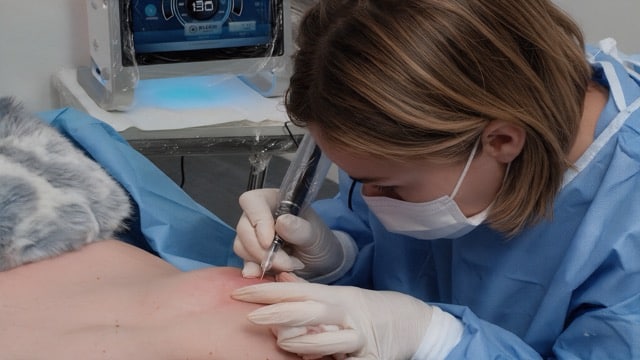
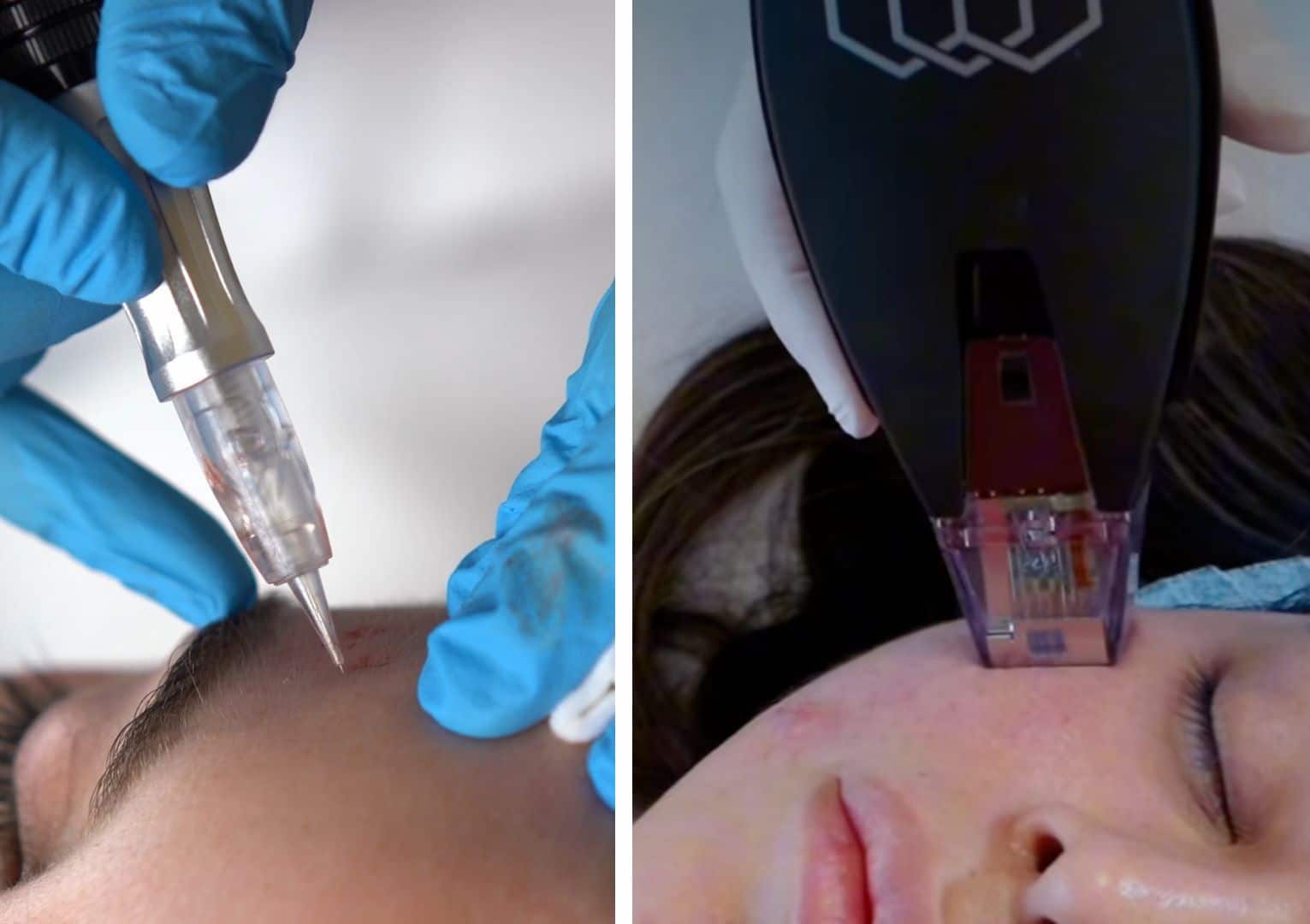
Microneedling is a treatment that stimulates cell regeneration. By creating tiny microperforations in the dermal layer, it naturally boosts tissue repair and increases collagen and elastin production. This brings noticeable benefits to the skin and makes microneedling a versatile tool for improving many skin imperfections.
Exosomes can be used intradermally, which is where they work perfectly with microneedling. The micro-channels created by microneedling help exosomes reach the dermis effectively.
Thanks to these tiny openings, hundreds of millions of exosomes can penetrate the dermal layer despite their small size.
Using microneedling together with these powerful active ingredients is highly effective. This combination can treat inflammatory conditions such as acne, rosacea, and dermatitis. It also benefits sensitive skin, boosts collagen and elastin production, slows down aging processes, and helps reduce visible signs of aging.
Collagen and Elastin: How They Improve Skin Health
Collagen and elastin play a key role in this regenerative process: it is their stimulation, using a microneedling device, that allows the skin to regenerate in depth.
Discover all the benefits of stimulating collagen with microneedling!
In addition to the natural increase in collagen production that results from microneedling, the combination with exosomes allows a greater cellular response thanks to these vesicles that transmit information to the cells on how to produce new collagen.
Exosomes and the face: all applications of exosomes
The boom in scientific research results on the use of exosomes in aesthetic medicine has led to a huge amount of experimentation on all possible applications and their benefits with regard to individual blemishes that can be treated with exosome therapy.
Exosomes in aesthetic medicine: what they are used for

Having ascertained the opportunity that exosomes give us, in combination with microneedling, to act on tissue regeneration, let us see what blemishes can be treated with exosome-based therapy in combination with microneedling and what can be achieved:
- Acne and other inflammatory conditions such as dermatitis and rosacea;
- Other pathologies such as lupus, psoriasis, vitiligo, alopecia;
- Reduction of existing wrinkles and prevention of new signs of ageing;
- Improvement in texture, firmness and radiance;
- Increased production of collagen and elastin;
- Improvement in skin elasticity;
- Tissue regeneration;
- Scars from acne, trauma or post-surgery;
- Reduction of damage caused by UV rays and other stress factors such as pollution and smoking;
- Strong and deep hydration.
The potential of exosomes is more than evident and it is obvious why exosome-based therapy is increasingly in demand.
Exosomes and microneedling for hair disorders:
In addition to their use in the field of aesthetic medicine, one should also consider the great potential of exosomes in the treatment of pathologies such as alopecia and others related to the scalp and hair loss.
Treatment with exosomes is indeed indicated for scalp treatment:
- For those with hair loss problems;
- Those with an inflamed scalp;
- Those who want to prevent or counteract the natural weakening of the hair fibre and the consequent reduction of hair in terms of quantity and thickness.
Here too, it is important to highlight that microneedling and exosomes work best together. Microneedling is an excellent treatment for hair and scalp issues. When combined with exosomes, it becomes even more effective. This combination promotes hair bulb regeneration and provides a strong anti-inflammatory effect.
Microneedling with exosomes: the treatment of the stars
The buzz around this treatment is also because many national and international celebrities openly share their secret to youthful skin.
Hollywood stars like Kim Kardashian, as well as Italian showbiz figures like Ilary Blasi, have revealed that they regularly use the treatment combining microneedling and exosomes.
The high interest is understandable: microneedling is minimally invasive, and when combined with powerful ingredients like exosomes, it significantly amplifies both benefits and results.
Conclusions
Microneedling is becoming increasingly popular, and exosomes are definitely the trend of the moment. In Italy and Europe, microneedling is the only approved method to deliver exosomes, since direct injections are not allowed.
Using microneedling to convey exosomes enhances the treatment’s effectiveness. In addition to all the benefits of standard microneedling, it provides extraordinary results quickly, with very short recovery times.
Don’t miss all the news and updates on innovative protocols and subscribe to our Newsletter now!